



Start choosing a jewelry display counter with your floor plan and the pieces you want to show. A cabinet that looks right in a photograph may leave too little room for staff, door movement or customers in your store. Compare the complete footprint and how the counter will be used before choosing its finish.
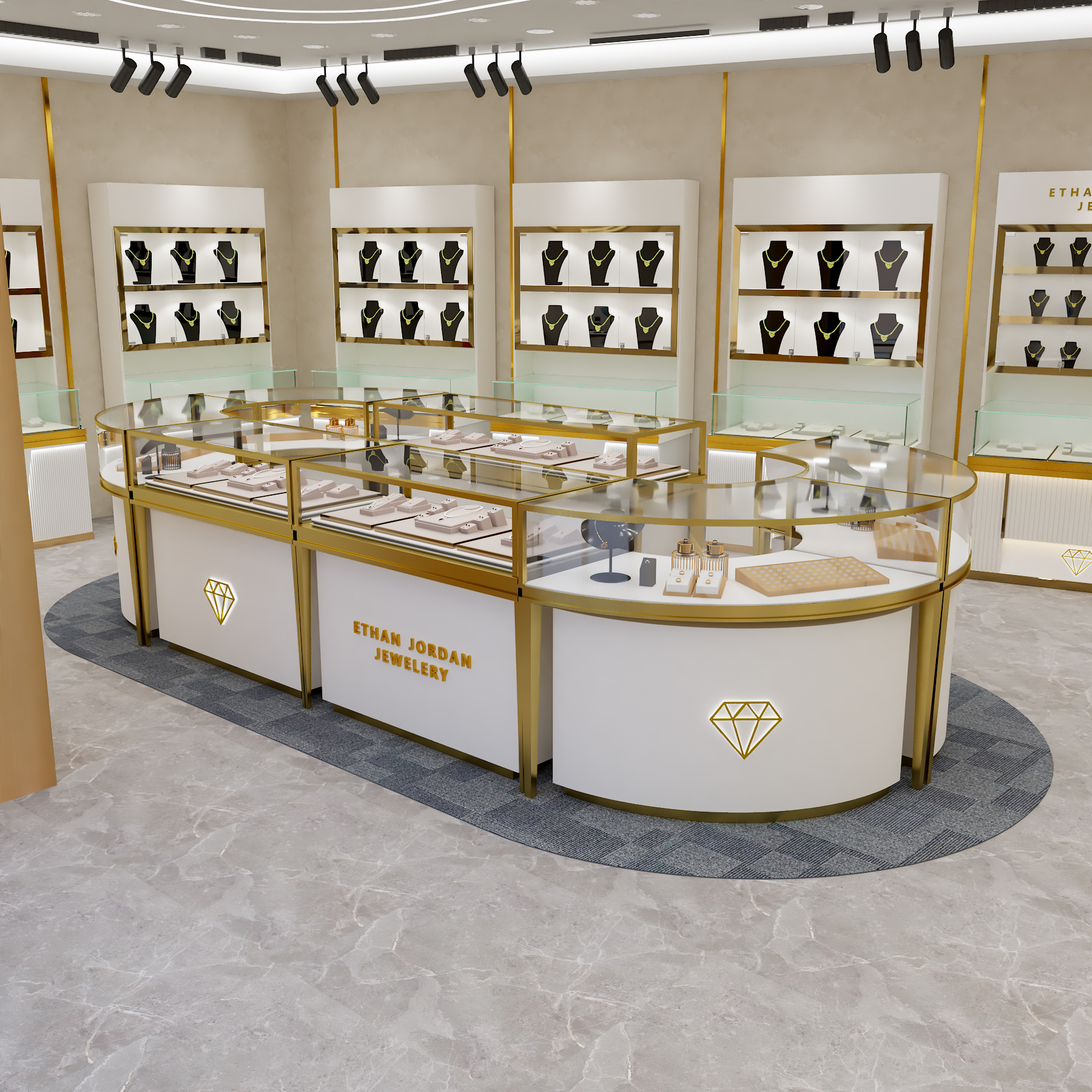
Counter or countertop display case?
A floor-standing jewelry counter forms part of the store layout. A countertop case sits on an existing table or worktop. These are different products: check the full height, support requirements and display area rather than relying on the word “counter” alone. The HZD jewelry display counter collection contains floor-standing designs.
Measure the whole working area
- Record the available length, depth and height, with units clearly marked.
- Mark entrances, columns, electrical outlets and the staff side of the counter.
- Allow for access panels or doors, customer circulation and your local accessibility requirements.
- Check the delivery route, including doorways, stairs and lifts.
For example, listed HZD counter modules include 120 × 45 × 95 cm designs and selected 150 × 55 × 95 cm models. These examples are not a fit recommendation: compare the dimensions of the actual model with your plan.
Match the display to the jewelry
Decide whether the case will primarily hold rings, necklaces, watches or mixed collections. Tray dimensions and necklace-bust height affect usable display space. Ask for the interior dimensions and lighting arrangement; exterior measurements alone do not show what will fit inside.
Compare materials, lighting and access
Painted metal, wood-paint finishes and titanium-plated stainless steel offer different appearances. Compare samples under the store lighting, and read the model specification for the frame and base separately. A finish name does not establish glass thickness, lock type or security performance.
For an LED jewelry display counter, confirm the light color, driver requirements and servicing access. Check the specified glass and door hardware. Do not assume every case includes adjustable lighting, alarms or a particular locking system.
Plan adjoining cabinets
A straight counter run may need a staff entrance, a corner or a rounded end. Compare curved jewelry showcases and check matching heights, finishes and joint details. Cabinet modules should not be assumed to connect simply because their exterior heights match.
Prepare a comparable quote request
Send the model references, quantity, measurements, finish preference, lighting needs and delivery destination. Ask which configuration the quote covers, and confirm freight, packing, taxes, unloading and installation responsibilities separately. For non-standard requirements, use the custom jewelry showcase page.
Quick answers
What size jewelry counter should I choose?
Choose a size that fits both your merchandise and the working layout. There is no universal best size; check access and interior dimensions as well as the overall footprint.
Can I combine straight and curved counters?
Potentially, but confirm a coordinated drawing and configuration with the supplier before ordering. Check joins and access rather than combining units from pictures alone.


